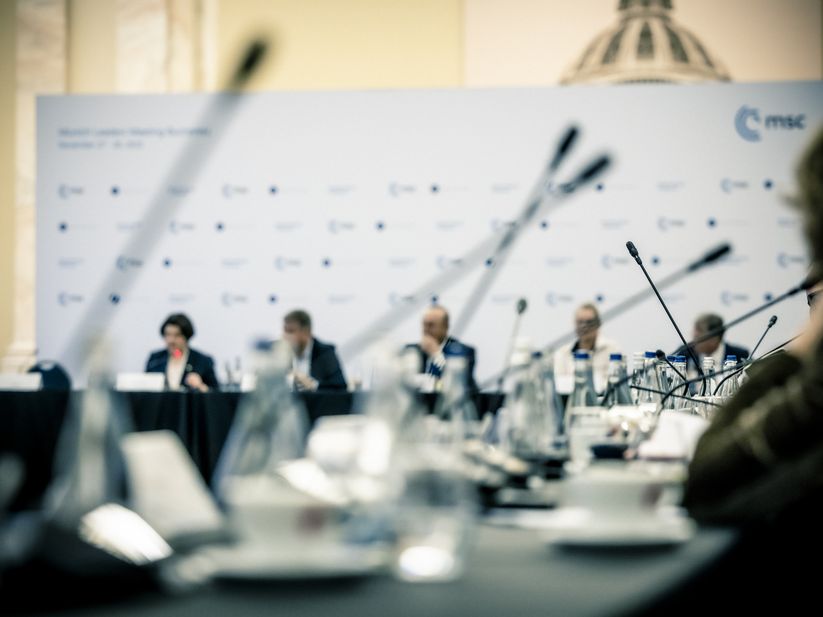
Tensions between China and Japan escalated at the Munich Security Conference after Chinese Foreign Minister Wang Yi publicly criticised Prime Minister Sanae Takaichi over her remarks on a potential Taiwan contingency. The exchange has triggered a diplomatic back-and-forth, emphasising widening divisions over regional security and the future of cross-Strait stability.
Speaking at the high-profile security forum in Germany, Wang responded to Takaichi’s recent parliamentary statement that a crisis involving Taiwan could constitute a “survival-threatening situation” for Japan, a legal designation under Japanese security law that could permit the exercise of collective self-defence.
According to China’s Foreign Ministry, Wang argued that such remarks amounted to “a direct challenge to China’s sovereignty and the post-war international order,” adding that Beijing cannot accept such transgressions. He further accused Japan of failing to fully reckon with its wartime history, claiming that “the ghost of militarism seeking revival still lingers.” Wang also referenced visits by Japanese politicians to Yasukuni Shrine, where Class-A war criminals convicted by the postwar tribunal are enshrined.
Foreign Minister of Japan, Toshimitsu Motegi, used a subsequent session at the conference to reject Wang’s characterisation. Japan’s Foreign Ministry also posted a pointed statement on X, appearing to reference China’s military activities.
“There are countries that have continued for many years to expand opaque military capabilities and are persistently strengthening attempts to change the status quo by force and coercion unilaterally,” the ministry wrote. At the same time, Japan emphasised that its ongoing defence buildup is “a response to an increasingly severe security environment” and “not directed at any specific country.”
The Chinese Embassy in Japan issued a further statement accusing Tokyo of “distorting facts” and reiterating criticism of Takaichi’s parliamentary remarks. The embassy questioned whether it was not true that Japan’s prime minister had said a Taiwan crisis could qualify as an “existential crisis” under Japanese law.
Under Japan’s 2015 security legislation, such a designation could allow the Self-Defence Forces to assist an ally, most notably the United States, should Japan’s survival be deemed at risk. Analysts have interpreted Takaichi’s explicit framing of Taiwan in those terms as part of Japan’s shifting foreign policy towards a more forthright security posture as a response to rising tensions in the Indo-Pacific.
Notably, Wang’s remarks did not appear to gain broad support among other conference participants. Australian Defence Minister and Deputy Prime Minister Richard Marles told the forum that what is complicating the regional environment is China’s “intense military buildup without explanation.” He stressed that Australia is working alongside the United States and Japan to preserve regional peace and stability.
Taiwan’s Foreign Minister Lin Chia-lung also issued a statement asserting that “China is the real threat to security.” Meanwhile, former U.S. Ambassador to China Nicholas Burns wrote on X that the criticism of Japan amounted to propaganda designed to intimidate Tokyo and divide it from Western allies.
The clash at Munich serves as a reminder that debates over Taiwan are no longer confined to East Asia; they are firmly embedded in the global security agenda.


Be First to Comment